

After the death of a loved one, guilt tends to surface. We wonder what we could’ve done that we didn’t. There are things we did and said that we regret.
“I feel guilty,” is a common statement from grieving hearts.
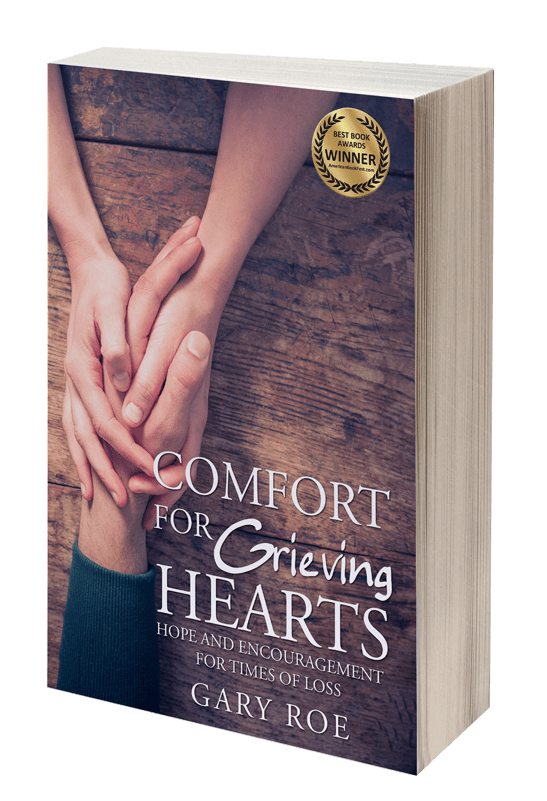
The following is an excerpt from Comfort for Grieving Hearts. I think you’ll be able to relate to the Grieving Heart in this chapter. I hope you find these words comforting and encouraging today.
I FEEL GUILTY
FROM THE GRIEVING HEART:
Surely, I could have done something that would have made a difference. I laid awake last night, thinking of all I might have done or said that could have prevented this. I wanted to be able to stop you from leaving. Perhaps I can do something to bring you back?
Ridiculous, I know. Yet, my heart seems stuck there. Deep down, I believe that this is my fault. I feel guilty.
After all, someone must be responsible, right? And not knowing who that is, it might as well be me.
Is this another form of sadness? Am I mad at myself? Was I in the wrong place at the wrong time? Is this more of me trying to make sense out of what I can’t seem to accept?
Strangely, sometimes the guilt feels good. I seem to need a target for this pain, even if that target is me. Otherwise, it all seems completely random and by chance, and that’s simply too terrifying for my soul to contemplate right now.
I would rather feel guilty.
When tragedy happens, at first, we’re stunned. When we come to our senses, we begin to wonder who’s responsible for the current situation. We naturally look for someone to blame. Our anger and angst need a target.
And often, the most convenient target is ourselves.
When loss attacks, guilt is usually not far behind.
Some of us are quite familiar with guilt. We grew up with it. It has been our frequent, often uncomfortable companion. Guilt moves in and unpacks its bags. It makes a home in our hearts.
Guilt is noisy. It’s always speaking, filling our minds with its words and subtle accusations. Guilt’s voice becomes so familiar, we begin to confuse it with our own.
Yes, it’s our fault. It always is.
Guilt may be a frequent guest, but he is not our friend. His accusations and influence profit nothing. Entertaining him too much naturally leads to depression that is more than temporary. Wherever possible, it’s best to recognize him, call him out, and send him packing.
Guilt is common and natural in grief. How we respond to it can make a big difference.
Affirmation: Guilt is not my friend. I must find ways to show him the door.
Praise the Lord, my soul; all my inmost being, praise his holy name. Praise the Lord, my soul, and forget not all his benefits—who forgives all your sins and heals all your diseases, who redeems your life from the pit and crowns you with love and compassion… (Psalm 103:1-4)
Excerpt from Comfort for Grieving Hearts: Hope and Encouragement for Times of Loss
Comfort for Grieving Hearts has been revised and expanded into other books specifically for the loss of a spouse, a child, and a parent. You can check out the entire Comfort Series here.
Question: Have you felt guilty since the death of your loved one? Feel free to share by commenting below.










I listen to one of your books a long time ago, and it was so impactful After losing my mother. I had dealt with so much grief and guilt of the night before she died. And I thought you had said in one of your books that guilt is a former control.. Kind of like to rewrite the past.. I’ve quoted that a lot and last night people wanted to know who said it. Was that the exact quote said possibly? If so do you have the book so I can reference it? Please 🙏🏻
HI Peggy. Good to hear from you. I’m so glad the book was helpful. Yes, guilt can indeed be a form of control. Honestly, I don’t recall most of what I write – exactly, that is. And I have no way of finding that quote, so I’m no help to you there! Sorry about that. But you can quote me here – “Guilt is a form of control. It’s our attempt to take charge and make sense out of what happened in a way we think we can live with it. But guilt is not our friend. We need to show it to the door, over and over again.” I hope that helps! Blessings to you…
My wife died of early on set alzheimer’s. I was the caregiver who took care of her. It’s been a year and a half that she’s been gone. I have regrets that I could have taken better care of her. Lost my patience a few times, and some moments were tough. Ironically, when she was working, she was Director of Nursing for people with alzheimer’s. I wish that I had her patience.
Hi Steve. Thanks for sharing this. Caregiving is, well, impossible to get “right” in the sense that we will have no regrets. We could always have done better. I want to thank you for caring for your wife. In my years in hospice, I walked alongside caregivers like you – and I walked away shaking my head, wondering how they did it. 24/7/non-stop. Ony God can do this perfectly. Please be kind to yourself. Praying for you now, Steve. You are a blessing.
That is what I feel. Still after 3 years . I should have been home. I should have not yelled the weekend before. I want that week back to do better
Hi Marie. Thank you for sharing this with us. Yes, we look back, and regret. We should have. We wished we hadn’t. Guilt and more guilt. We would love some do-overs. Please be patient with yourself. Praying for you now, Marie…